

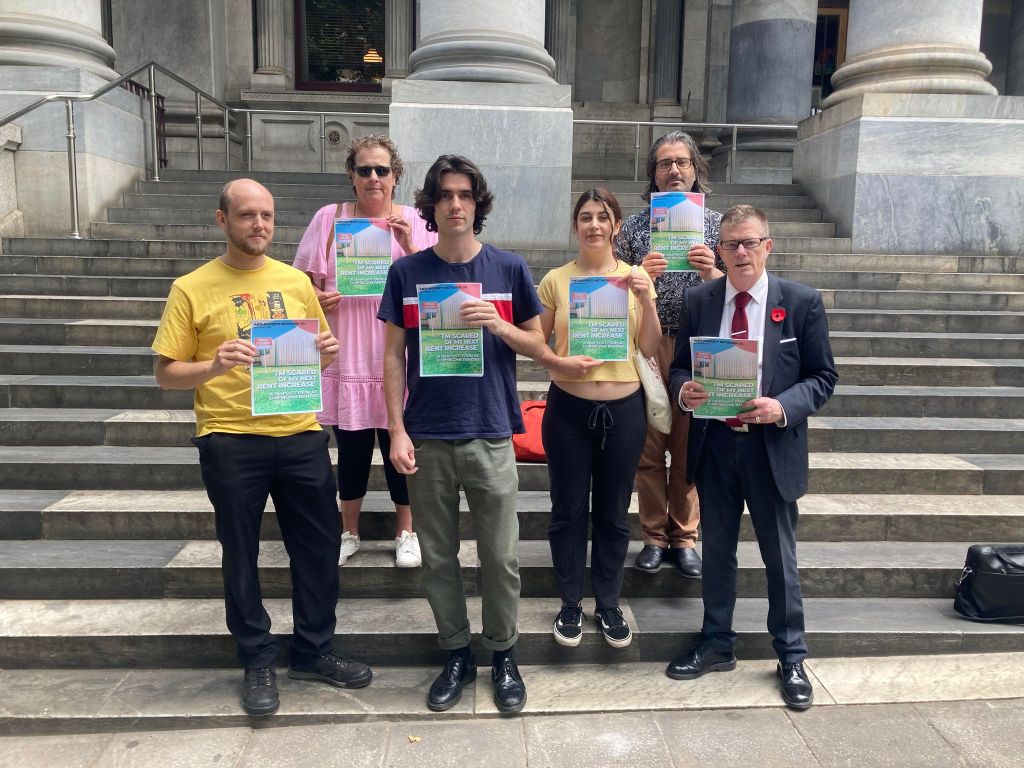
On November 8, 2023, Anti-Poverty Network SA released ‘I’m Scared Of My Next Rent Increase’, our latest renting report, which includes the findings of a survey of 301 low-income renters.
This year’s survey, the third of its kind, has highlighted the profound, ongoing impacts of SA’s rental affordability emergency on people’s health, finances, and stability.
Findings illustrate how Adelaide’s cruel rental market and unlimited rent rises have impacted people’s wellbeing (see end of media release for selection of key findings).
Anti-Poverty Network SA spokesperson Brendan Folwell said: “These findings are yet another reminder of the human toll of SA’s rental affordability crisis on people’s basic needs and wellbeing.
We cannot have a fair rental system, until we no longer have the huge, unlimited rent rises that are causing people to be unable to put food on the table or pay for medicines, or effectively be kicked out of their home, with nowhere to go.
While there has been recent progress on rental reform, including plans to ban no-cause evictions, we know that until the state government acts on the affordability emergency, we will continue to see people’s lives wrecked by skyrocketing rents.
We know there are people being forced out of rentals, not because they are being evicted, but because it is impossible for them to afford the rent.
The state government needs to legislate an emergency rent freeze, and other measures, to give renters, especially those in poverty, the chance to catch their breath after years of massive rises.
It needs to ensure that rental properties meet minimum standards of energy-efficiency, heating, and cooling, so that people’s homes do not make them sick.
It needs to ramp-up its public housing commitment. A few hundred extra public homes – 3 extra public homes per week – is nowhere near enough, when there are over 15,000 people on the waiting list, and SA has a shortfall of 32,000 social homes, according to modeling by Homelessness Australia”, Mr Folwell said.
Selection of key findings:
Financial hardship:
– 80% were experiencing ‘rental stress’ (spending more than 30% of their income on rent)
– 41% were experiencing ‘rental crisis’ (spending more than 50% of their income on rent)
– 70% said the cost of rent impacted their food budget, that they sometimes had to skip meals, or cut back on fresh food
– 62% said high rents made it harder to cover medical expenses
– 27% reported having to leave a rental property, because of the size of their last rent rise
Cooling and heating:
– 55% thought their house did not have adequate cooling and heating
Discrimination:
– 59% thought they had experienced discrimination, while applying for rentals, with 27% unsure
What renters want:
– 93% want rent-caps to address massive rent increases
– Read the full report here.
– Read the summary of survey results here.
 Anti-Poverty Network SA