
This page provides information about the grossly inadequate JobSeeker Payment, broken down into a few sections:

Key Messages
Everyone deserves an income where they can pay for housing, bills, medicine, food, studying, job-searching, and staying connected to their community. We have never seen more people on JobSeeker who are struggling to keep a roof over their head and put food on the table.
- JobSeeker is $54 a day. This is roughly $32 a day below the Henderson poverty-line, and the lowest unemployment payment in the developed world.
- In April 2023, the Albanese Government’s Economic Inclusion Advisory Committee recommended a “substantial raise” to JobSeeker. But the Government has still refused to act on this advice.
- Australia has proven we can afford to lift people out of poverty. During COVID, the Morrison Government showed how quickly this could be achieved when it temporarily doubled the rate of JobSeeker. The impacts of this on people’s health were extraordinary.
- Budgets reflect where governments choose to spend money – when they say they cannot afford to raise Jobseeker rates to a livable level, this means they are choosing to spend that money on things they believe are more important than helping people out of poverty.
- There is no evidence a JobSeeker raise would discourage job-searching.
- Most of the skyrocketing inflation we have seen is coming from huge corporate profits, the housing market, and overseas economic and political impacts.
Key Statistics
| Income Type | Weekly Income |
|---|---|
| Base Rate of JobSeeker (2024) | $381 |
| Full-Time Average Earnings (2023) | $1875 |
| Median Worker Earning (2023) | $1250 |
| Minimum Wage (2022) | $813 |
| The Henderson Poverty-Line (2023) | $602 |

According to Anglicare’s annual Rental Affordability Snapshot, less than 1% of rentals nationwide are affordable for a single person on JobSeeker.
There is 1 entry-level role for every 26 job-seekers, and 44% of job vacancies require tertiary-level qualifications.
Over 40% of those on job-seeker payments have a diagnosed disability.
A September 2023 ACOSS cost of living survey on JobSeeker and other Centrelink payments highlighted the extent to which people already living in deep poverty have been affected by skyrocketing living costs:
- Of those who are privately renting, more than 70% reported experiencing at least one rent increase in the past year.
- And of those, nearly half (48%) are facing increases of more than $40 a week, with 1 in 3 facing increases of more than $50 a week.
- More than 94% reported ‘rental stress’ (spending more than 30% of their income on rent), with more than half reporting ‘rental crisis’, spending 50% or more of their income.
- Almost every respondent (99%) reported seeing an increase in their grocery bill over the past year.
- More than 70% said they were eating less and rationing meals. 64% said they were cutting back on healthier food, including meat, and fresh fruit and vegetables.
- Respondents reported limiting cooling or heating usage (73%), use of lights (62%), or taking fewer hot showers (54%) to use less energy.
- 64% of respondents said they went without food or medicine to afford their energy bills.
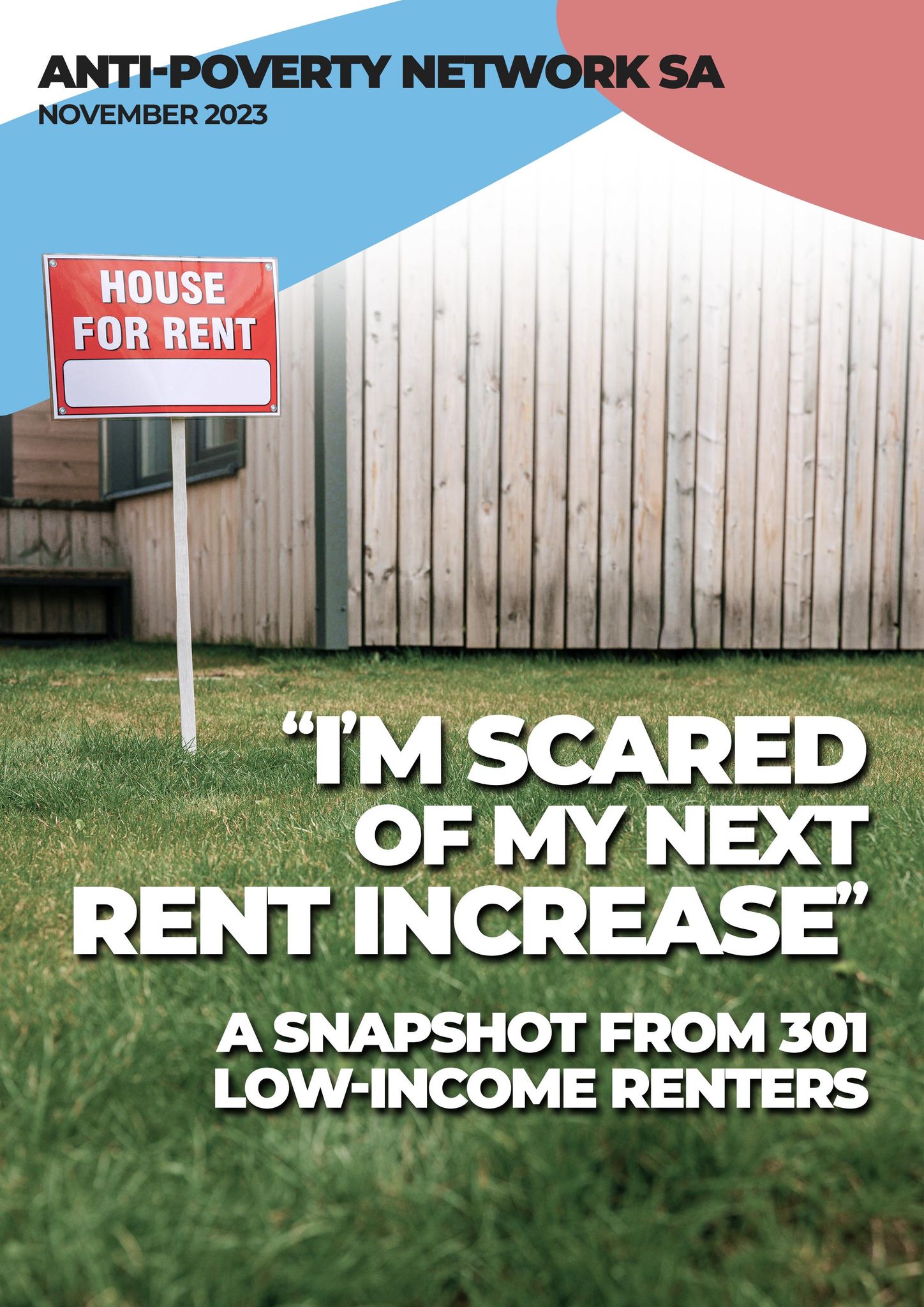

Our 2023 report “I’m Scared of My Next Rent Increase” found strikingly similar results across the board.
When JobSeeker was temporarily doubled in 2020, during COVID:
- The number of people skipping meals because of a lack of funds had dropped by over half, to 33%.
- People’s ability to purchase nutritious food dramatically increased, with 93% reporting that they could afford more fresh fruit and vegetables, and 86% reporting that they could afford more meat.
- But even on the doubled rate of JobSeeker, 3 in 10 people reported that they were still skipping at least 1 meal a week, and 4 in 10 people reported that they were still struggling with medical expenses.
On Raising JobSeeker,
and Looking for Paid Work
Many people seeking paid work are older workers, people with disabilities, and parents with young children, they face additional barriers when competing for jobs. To make matters worse, instead of supporting people to find paid work, we are making their lives harder with harsh payment compliance (“Mutual Obligation”) arrangements.
Lifting JobSeeker will actually help people look for jobs because they can focus on interviews and applications rather than budgeting to make sure they can survive.
There is 1 entry-level role for every 26 job-seekers, and 44% of job vacancies require tertiary-level qualifications. Over 40% of those on job-seeker payments have a diagnosed disability.
Paying for a Raise to JobSeeker
(and Other Centrelink Payments)
There are many ways of funding a significant raise to JobSeeker and other Centrelink payments, include ending the many tax concessions that largely benefit the very well-off, such as:
- Ending the negative gearing and capital gains concessions that benefit investors and landlords (worth $157 billion over 10 years), and have helped inflate the housing market.
- Ending the billions of dollars of subsidies (over $10 billion a year) for the highly-destructive fossil fuels industry, and ensuring that fossil fuels companies are properly taxed, through a Petroleum Rent Tax.
- Properly taxing corporate Australia: 3 in 10 companies paid no income tax, in 2021-2022.
2 Years of Breadcrumbs
2 years into the Albanese Government, job-seekers and others continue to languish in poverty:
- The 2023 Federal Budget saw an insufficient $2.86 a day/$20 a week raise to JobSeeker, along with the Mature Age Supplement being extended from over-60s to over-55s (with an extra $3.57 a day/$25 a week).
- The 2024 Federal Budget saw no JobSeeker raise – though people earning $200k a year got a $4.5k tax cut!
- Rent Assistance has been increased by $20 a week in the last 2 years, but we know many people’s rents increase by much more than this yearly, which means this money is likely going straight into landlords’ pockets.
- Aside from sole parents being returned to Parenting Payment, a welcome move meaning solo parents will now only have to switch to JobSeeker after their youngest child turns 14, relief for people on the lowest incomes has been miniscule.
For more information and a breakdown of the last two years budgets, you can see our 2024 Federal Budget media release and our 2023 Federal Budget media release.
What Anti-Poverty Network SA is Calling For
A liveable, dignified income for all, by raising JobSeeker, Youth Allowance, and other Centrelink payments above the Henderson poverty-line, to at least $88 a day.
The relaxation of unfair eligibility requirements for the Disability Support Pension, so that more people with complex, chronic health issues, are able to qualify for the payment.
The ending of all “Mutual Obligation” requirements, including compulsory Job Agency appointments and activities, and Work For The Dole Activities, activities that do nothing to help job-seekers find paid work.
The scrapping of all non-voluntary versions of Income Management (Welfare Quarantining), including the Basics Card.
This resource is also available as a pdf document format factsheet.
 Anti-Poverty Network SA